Infertility often has various causes. One of them is genetic abnormalities in embryos, which can be screened using the PGT (Preimplantation Genetic Testing) technique, or genetic testing of embryos before implantation. This helps doctors select healthy embryos with a high chance of successful implantation before transferring them back into the uterine cavity.
What is PGT?
PGT or Preimplantation Genetic Testing is the screening of embryos for genetic abnormalities by using the IVF method together with genetic testing of the embryo. This method helps couples have the opportunity to choose embryos with normal chromosomes, and also helps increase the pregnancy rate per embryo transfer cycle.
Generally, PGT is divided into 3 main types
1. PGT-A (Preimplantation Genetic Testing for Aneuploidy)
This is screening for chromosome number abnormalities in an embryo to look for abnormalities such as extra or missing chromosomes, which are the main causes of early miscarriage and Down syndrome. PGT-A testing helps doctors select embryos with a normal number of chromosomes (Euploid) to transfer back into the uterine cavity.
2. PGT-M (Preimplantation Genetic Testing for Monogenic Disorders)
This is screening for genetic diseases caused by a single abnormal gene, such as thalassemia, cystic fibrosis, or other genetic diseases that can be passed from parents to children. Steps for PGT-M Embryo Chromosome Testing
3. PGT-SR (Preimplantation Genetic Testing for Structural Rearrangements)
This is screening for abnormalities in chromosome structure, such as chromosome translocation or the deletion of a part of a chromosome, which may cause an embryo to fail to implant or result in miscarriage.
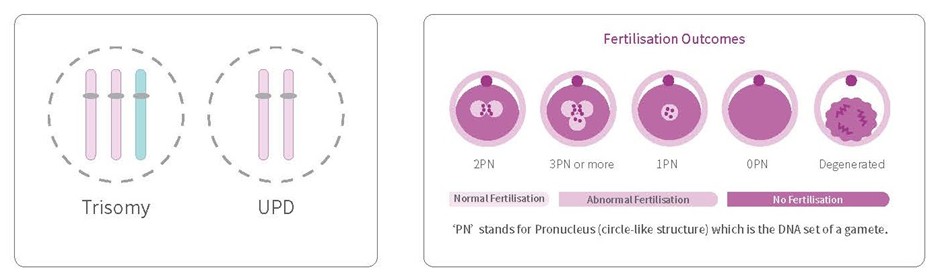
Although PGT-A is a technology used alongside the In Vitro Fertilization (IVF) process with the goal of helping increase the chance of a successful pregnancy and reducing the risk of miscarriage caused by chromosome number abnormalities in an embryo, this test uses data analysis from a technique called Copy Number Variation (CNV). However, sometimes even when choosing an embryo with a normal number of chromosomes to transfer back into the uterine cavity, implantation still does not occur, or miscarriage may happen during the first trimester of pregnancy, which may be caused by chromosome set abnormalities such as Triploidy, which conventional PGT-A techniques cannot yet detect. Currently, a testing technique called PGT-A Upgrade has therefore been developed.
What is PGT-A Upgrade?
PGT-A Upgrade is a technique for screening chromosome number abnormalities in embryos before implantation, using the Copy Number Variation (CNV) technique together with Single Nucleotide Polymorphism (SNP) to analyze chromosome number abnormalities in greater detail and with higher accuracy, as well as enabling the selection of embryos with completeness and increasing the chance of a successful pregnancy.
How is PGT-A Upgrade better than PGT-A?
- It can detect increases or decreases in the number of chromosome sets, such as Haploidy and Triploidy.
- It can detect Uniparental Disomy, even when an embryo has a normal number of chromosomes (2N) but receives chromosomes from only one parent.
- It can check siblinghood among embryos to confirm that the embryos sent for testing are truly siblings.
- It can identify syndromes/conditions caused by important chromosome gains or losses.
- It takes the same analysis time as conventional PGT-A, but gives results that are more accurate and deeper.
- It helps increase the chance of pregnancy and significantly reduces the risk of recurrent miscarriage.
Who is PGT-A Upgrade suitable for?
- Couples aged 35 years and older
- Those with a history of molar pregnancy
- Those who have a history of unexplained recurrent miscarriage
- Couples with a family history of genetics/genetic conditions
- Those who have a large number of embryos, but have never achieved implantation
Does PGT-A testing help increase the chance of pregnancy for everyone?
Results vary from person to person. PGT-A Upgrade helps doctors have additional genetic information for selecting embryos before transferring them into the uterine cavity, but it does not make embryos better quality or fix abnormalities that are detected.
Even if an embryo has test results within the normal range, other factors must still be considered together, such as uterine cavity readiness and embryo development; therefore, it cannot guarantee a successful pregnancy or childbirth.
Before testing, doctors will consider age, treatment history, number of embryos, and genetic risks to evaluate how the information obtained will help plan treatment. Detecting more abnormalities does not mean it will increase the chance of having a baby in every case.
Examples of PGT-A Success Cases
Reference
Frequently Asked Questions about PGT-A Upgrade
PGT-A Upgrade is a test that adds details or expands the scope of analysis from general PGT-A so that more information about the embryo’s chromosomes is obtained, helping doctors have information to evaluate and plan embryo selection for transfer back into the uterine cavity more appropriately. However, testing details depend on the technology and testing format of each laboratory.
PGT-A may help doctors have additional information in selecting embryos for embryo transfer, but there is still not enough evidence to conclude that PGT-A helps increase live birth rates for everyone undergoing IVF treatment. Therefore, it should not be considered a guarantee of pregnancy success.
Results from embryo chromosome number screening (PGT-A):
🟢Euploid: The embryo has a complete and normal number of chromosomes.
🔴Aneuploid: The embryo has abnormalities in chromosome number, such as having fewer or extra chromosomes than normal.
🟢🔴Mosaic: The embryo has cells with normal and abnormal chromosome numbers mixed together.
Note: Interpreting results and planning genetic treatment should always consult specialists and be considered together with the attending physician.
It cannot detect every type. PGT-A focuses mainly on screening for chromosome number abnormalities and does not cover all types of genetic abnormalities. If there is a risk of specific genetic diseases, other types of testing such as PGT-M or PGT-SR may be needed according to the doctor’s recommendation.